
Trump Administration Eases Iranian Oil Sanctions Amid Wartime Energy Crisis
Officials move to unlock 140 million barrels at sea as skyrocketing gas prices force uncomfortable policy reversal
WASHINGTON — Three weeks into war with Iran, the Trump administration is quietly easing sanctions on Iranian oil stockpiles — a move that allows U.S. allies to purchase crude from the very regime American forces are actively fighting.
The decision reflects a deepening energy crisis that administration officials now privately estimate could drive elevated oil and gas prices for months, particularly as fighting intensifies and passage through the Strait of Hormuz remains effectively closed, according to three people familiar with internal discussions.
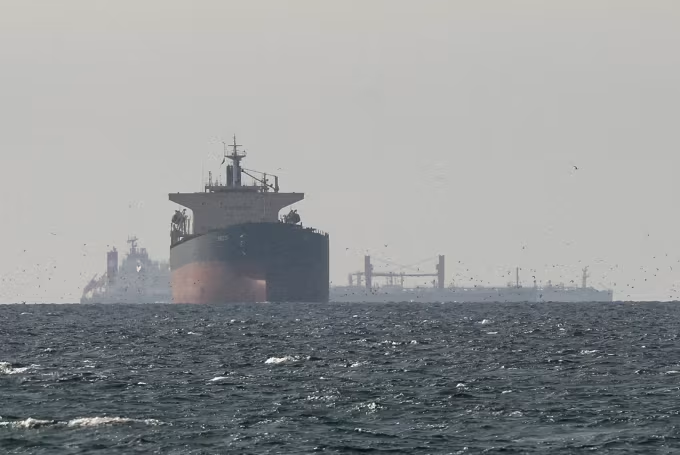
The temporary sanctions waiver targets roughly 140 million barrels of Iranian oil currently sitting in tankers at sea — supply that officials hope will inject some relief into a global market that has seen Brent crude hit $112 per barrel and U.S. gasoline prices approach $4 per gallon.
“Iran was going to sell those barrels anyway,” one person familiar with the internal discussions told CNN. “Instead of going to China, we make it sellable to Thailand or Vietnam.”
A Strategic Bind
The move places President Donald Trump in an awkward political position, coming after years of criticizing the Obama administration’s nuclear deal with Iran — which he had characterized as sending “cash to Iran.”
Treasury Secretary Scott Bessent framed the decision Friday as “using the Iranian barrels against Tehran to keep the price down as we continue Operation Epic Fury,” adding on X that Iran “will have difficulty accessing any revenue generated.”
U.S. Ambassador to the United Nations Mike Waltz called the measure “very temporary” and aimed at defeating what he described as “the Iranian strategy of driving energy prices so high.”
Still, energy analysts note that Iran stands to profit from sales in a market where prices have climbed more than one-third since hostilities began.
“The nuance here is there isn’t nuance,” said Landon Derentz, a former national security and energy official during the Obama, Trump and Biden administrations. “Nobody else has a bright idea.”
Limited Options, Limited Impact
The 140 million barrels available at sea represents roughly one-and-a-half days of global oil consumption, according to the U.S. Energy Information Administration — a short-term fix that experts warn will be quickly exhausted.
“If they pursue this strategy and allow buyers to buy off this oil on the water, it’ll go quickly,” said Gregory Brew, a senior analyst at Eurasia Group specializing in oil and gas. “Then we’ll be faced with the interesting proposal of dropping sanctions on Iranian oil generally.”
The administration has already exhausted its standard policy responses: releasing hundreds of millions of barrels from strategic reserves, easing some sanctions on Russian oil, and accelerating domestic crude flows. Officials have also considered waiving summer-blend gasoline regulations, though a White House official said no decision has been made.
More extreme options — including restricting oil exports or direct government market intervention — have been ruled out.
Internal Disconnect
The closely held nature of war planning has complicated the administration’s response. Decision-making remains concentrated among a small circle of top Trump advisers, leaving energy officials struggling to anticipate what comes next.
“They’re kind of resigned to watching,” one person familiar with internal discussions said. “The way this administration has run its policy is a very small group — and that only expands to solve problems.”
Trump has publicly downplayed the economic disruption, telling reporters Friday that the Strait of Hormuz “at a certain point, will open itself” and describing any domestic impact as “short-term pain” worth the military objectives.
White House spokeswoman Taylor Rogers said in a statement that Trump and his team “have considered all the options on the table to mitigate these short-term disruptions and has quickly taken action when necessary.”
“Ultimately, once the military objectives are completed, oil and gas prices will drop rapidly again, potentially even lower than before the strikes began,” she said.
What’s Next
Energy experts say the administration is approaching a binary choice: find a way to reopen the Strait of Hormuz — through which approximately 20% of global oil production passes — or brace for worsening economic consequences.
“This is the biggest disruption to the oil markets that you can imagine,” said Neelesh Nerurkar, a former senior Trump Energy Department official. “The shortfall is so large that the measures available are dwarfed by how much oil is not reaching the market.”
For now, the sanctions waiver buys time — but how much remains uncertain.
About The Author