
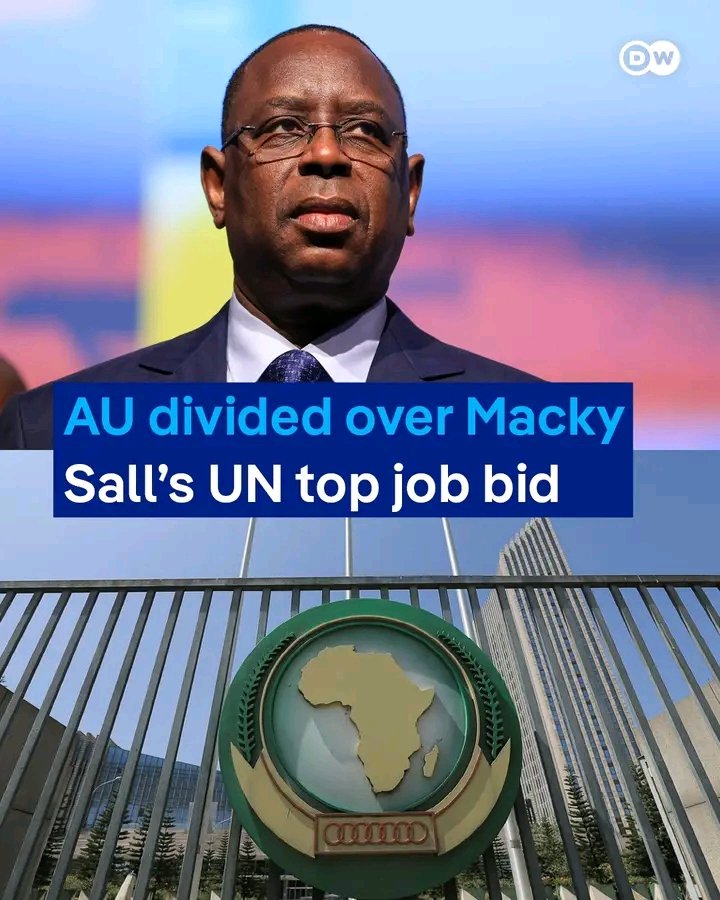
Fractures Emerge in African Union as Macky Sall’s UN Secretary-General Bid Stalls
Deep divisions have surfaced within the African Union (AU) over the candidacy of former Senegalese president Macky Sall for the position of United Nations Secretary-General, with a bloc of member states blocking a bid to fast-track the AU’s endorsement.
Tensions escalated after the AU attempted to rally behind Sall, citing his leadership experience in a draft decision circulated on March 26. However, what was intended to be a swift endorsement has instead exposed significant internal fractures, with multiple countries openly rejecting the move.
According to the AU Commission, approximately 20 member states “broke the silence” required for the fast-track approval process, effectively stalling the decision. As a result, the draft resolution supporting Sall’s candidacy “has not been adopted,” leaving the continental body without a unified candidate for the top UN post.
Complicating matters, Senegal’s own government has distanced itself from the former president’s campaign, stating that it has not officially endorsed his bid. The disavowal from Sall’s home country has further undermined the perception of a cohesive African candidacy.
Rwanda has leveled sharp criticism at the AU’s leadership, accusing Burundian President Évariste Ndayishimiye—who currently holds the AU’s rotating chairmanship—of attempting to impose Sall as the organization’s chosen candidate. The accusation points to deepening diplomatic rifts within the union, underscoring a lack of consensus on how to approach the high-stakes diplomatic contest.
Sall, who led Senegal from 2012 to 2024, has remained a prominent figure in African politics since leaving office. However, his post-presidency period has been marked by political unrest in his home country, adding another layer of complexity to his international ambitions.
With the silence procedure broken and no formal adoption of the draft decision, the AU now faces mounting pressure to reconcile its member states’ competing interests before presenting a unified African candidate for the UN Secretary-General selection process.
About The Author