
Uganda’s Economy Shows Mixed Signals: Business Registrations Soar Amid Rising Inflation and Environmental Concerns
Kampala, Uganda – The latest Microeconomic Indicators and Developments report for February 2026 paints a picture of a dynamic Ugandan economy, marked by a significant surge in formal employment and business activity, alongside growing pressures from inflation and environmental degradation.
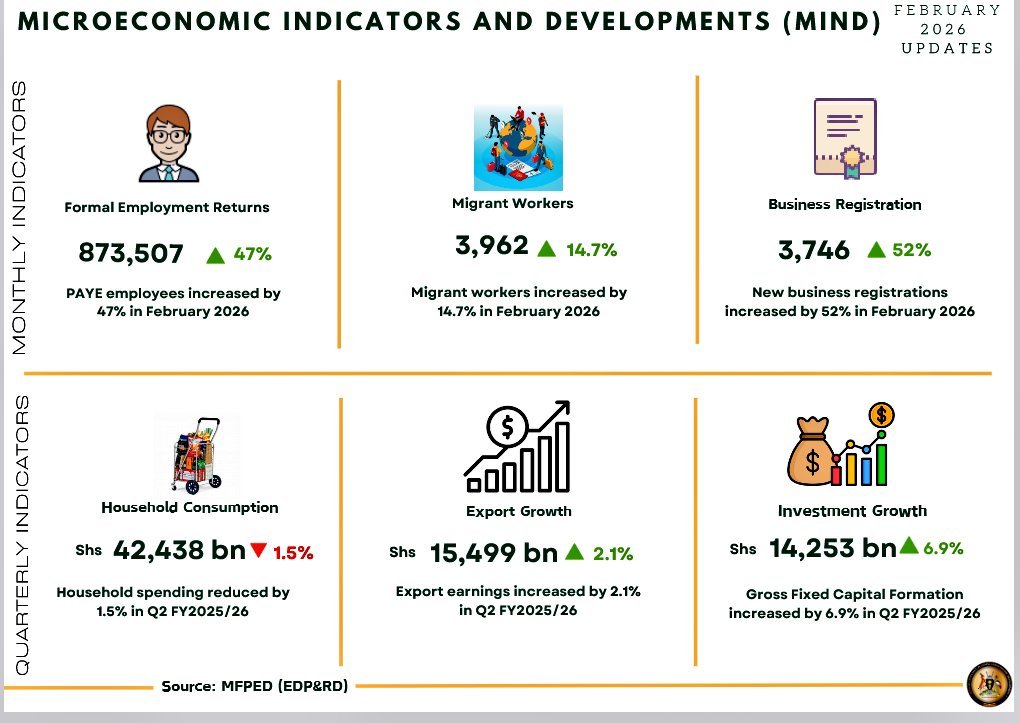
The report highlights a remarkable month for business formalization, with new business registrations jumping by 52% to 3,746 in February, up from 2,464 in January. This momentum is supported by government initiatives aimed at streamlining registration processes. The Uganda Registration Services Bureau (URSB) has been actively promoting formalization through its automated Online Business Registration System (OBRS), which has reduced registration times to as little as 30 minutes for a business name. Furthermore, the nationwide Mass Business Registration initiative, KiriEasy, is in its third phase, aiming to register over 235,000 new businesses in the 2025/26 fiscal year.
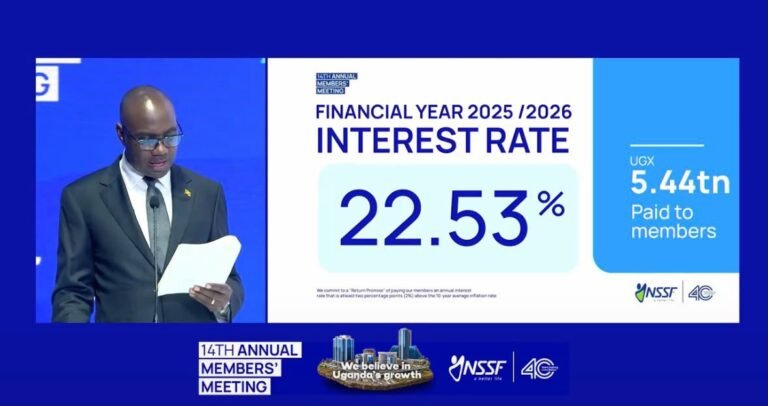
This drive for formalization is reflected in the labor market. Formal employment returns captured under the PAYE Register skyrocketed by 47%, from 596,195 employees in January to 873,507 in February. Concurrently, the number of migrant workers increased by 14.7% to 3,962 in the same period. The expansion of the formal economy is further evidenced by a 47% increase in membership to the National Social Security Fund (NSSF), growing from approximately 2.45 million members in FY2023/24 to over 3.6 million in FY2024/25.
However, the positive news on employment and business growth is tempered by mounting cost-of-living pressures. After a slight decline in January, inflation for Food and Non-alcoholic Beverages rose by 0.8% in February. Energy costs also climbed, with inflation for Liquid Energy Fuels registering a 1% increase, up from 0.3% the previous month. The average cost of 1GB of data also saw a 3.2% increase, rising to Ushs. 2,102 by December 2025.
A concerning environmental trend was also noted in the report, with air quality in Kampala deteriorating. Particulate matter, a key measure of air pollution, increased by 9.15% in February, rising from 29.5μg/m³ to 32.2μg/m³ as the country experienced hot, dry conditions.
On a brighter note, the investment climate showed resilience. Gross Fixed Capital Formation (GFCF), a measure of investment in the economy, increased by 6.9% in the second quarter of FY2025/26. The Uganda Securities Exchange (USE) All-Share Price Index also reflected growing investor confidence, climbing 10.3% in February to reach 1,826.07.
A regional spotlight on the West Nile sub-region revealed both opportunities and challenges. While the area serves as a key trade gateway to South Sudan and the DRC, it faces higher poverty and unemployment rates than the national average. To address this, the government has established a URSB regional office in Arua City as part of ongoing efforts to boost business formalization in the area.
The government continues to implement policies to sustain this economic momentum. Recent reforms include the amended Companies (Fees) Regulations 2024 to simplify business registration costs and the continued operation of the Uganda Business Facilitation Centre (UBFC) to streamline licensing and investment processes for both local and foreign investors.
About The Author