

Uganda Makes History with First-Ever Export of Canned Pineapple to China

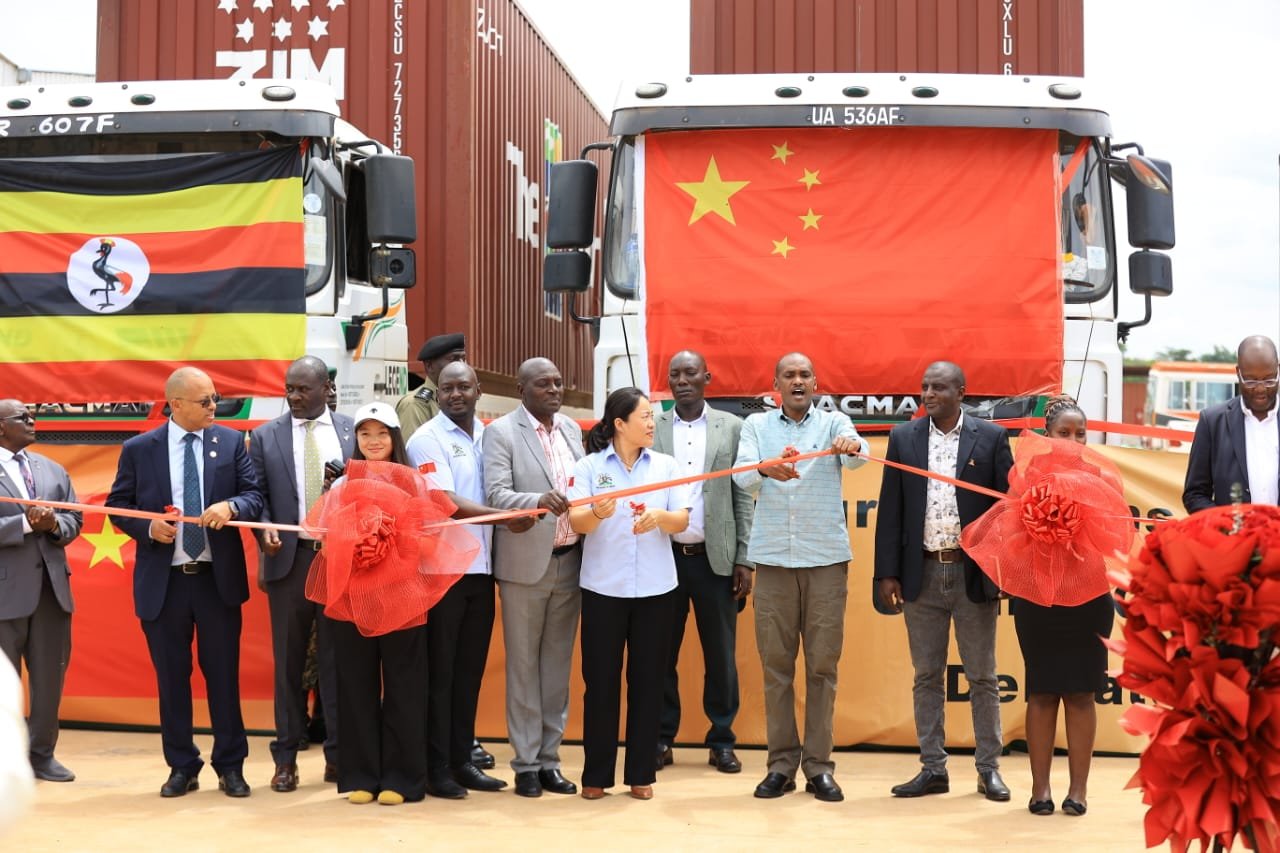
Uganda has officially flagged off its inaugural commercial shipment of canned pineapple to the People’s Republic of China, marking a transformative milestone in the country’s journey toward agro-industrialization and value addition.
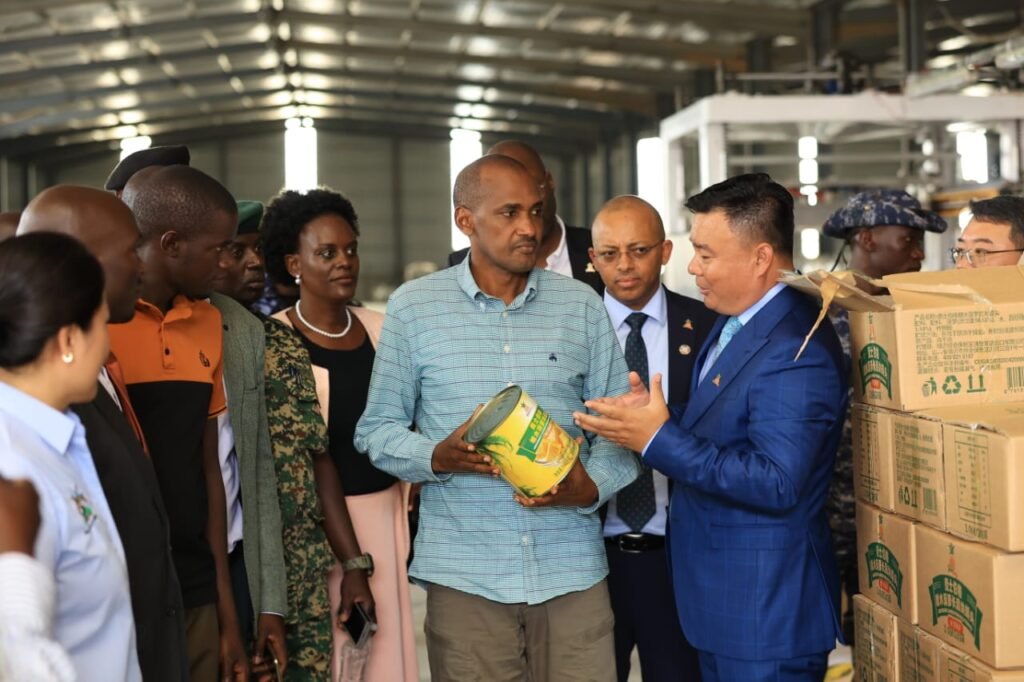
The historic consignment—four containers carrying 104 metric tonnes of processed pineapple—was dispatched from Deshiburg Fruits International Co. Ltd, Uganda’s first dedicated pineapple canning factory, located at the China-Uganda Agricultural Cooperation Industrial Park in Luweero District.
A New Chapter for Ugandan Farmers
Behind the shipment lies a larger story of changing livelihoods. The factory provides a reliable market for more than 1,500 smallholder farmers in Luweero, Nakasongola, Nakaseke, and Kayunga districts—areas where pineapple production has long been plagued by post-harvest losses and price instability.
“For many years, farmers in these districts faced significant post-harvest losses and price instability. Too often, their produce went to waste or was sold at very low prices. Today, that story is changing,” said Mr Leonard Zulu, the United Nations Resident Coordinator in Uganda.
Speaking at the flag-off ceremony, Hon. Frank Tumwebaze, Minister of Agriculture, Animal Industry and Fisheries, noted that the investment fundamentally transforms market prospects for pineapple farmers.
“With a factory capacity of 500 tonnes of pineapples per day, we no longer have a market problem; we have a production challenge. I appeal to our farmers to produce more and meet the required standards to supply both domestic and international markets,” he said.
For farmers like Jane Nakandi, one of the factory’s out-growers, the development has brought new certainty. “We now have a ready market for our pineapples. They are booked before they ripen, so we are assured of the market,” she said.
Value Addition: From Raw Commodities to Global Competitiveness
The export signals Uganda’s strategic shift from exporting raw agricultural commodities to supplying value-added products capable of meeting stringent international quality standards.
“What we are witnessing today is more than an export milestone. It is a story of transformation, of partnership, and above all, a story about people,” Mr Zulu added.
Mr Owen Yin, Chairman of Deshiburg Fruits International Co. Ltd, said the launch was the culmination of years of cooperation between Uganda and China, alongside private sector investment.
“Our factory is operating at full capacity using locally sourced Smooth Cayenne pineapples, processed without artificial preservatives. We are proud to be Uganda’s first factory dedicated to canned pineapple production,” he said.
Mr Yin also announced expansion plans into pineapple juice, quick-frozen pineapple, mango juice, avocado oil, canned maize, and dried tropical fruits to meet growing global demand.
South-South Cooperation Driving Results
The achievement underscores the impact of the FAO-China-Uganda South-South Cooperation Programme, which has facilitated technology transfer, deployment of Chinese technical experts, establishment of agro-industrial park models, and capacity building for farmers and institutions in production, processing, and market access.
Speaking at the event, Mr Ezana Getahun Kassa, the FAO Country Representative in Uganda, emphasised the broader significance of the moment.
“This milestone is a practical demonstration of what South-South Cooperation can achieve, linking farmers to technology, investment, and markets. It shows how partnership can transform agriculture into a driver of jobs, incomes, and economic growth,” Mr Kassa said.
He noted that value addition is a cornerstone of transforming agrifood systems—expanding opportunities for farmers, creating jobs along the value chain, reducing post-harvest losses, and strengthening the resilience and competitiveness of Uganda’s agrifood systems.
In December 2025, Uganda flagged off its first shipment of dried chili to China under the same cooperation framework. Together, these exports demonstrate the country’s growing competitiveness in international markets for value-added agricultural products.
Aligning with Global Goals
The initiative directly advances several Sustainable Development Goals (SDGs), including SDG 1 (No Poverty) by increasing incomes for smallholder farmers, SDG 2 (Zero Hunger) by strengthening food systems and reducing losses, SDG 8 (Decent Work and Economic Growth) by creating jobs along the value chain, SDG 9 (Industry, Innovation and Infrastructure) through agro-processing investment, and SDG 17 (Partnerships for the Goals) through collaboration between Government, private sector, FAO, and the Government of China.
“The United Nations in Uganda remains fully committed to supporting this journey—working with Government, FAO, development partners, and the private sector to build inclusive, resilient, and sustainable food systems,” Mr Zulu said.
Looking Ahead
With China being one of the world’s largest consumer markets, access presents significant opportunities for Uganda’s value-added agricultural products. The inaugural export of canned pineapple opens a new chapter for Uganda’s horticulture sector and strengthens the country’s position as an emerging supplier of high-quality processed foods to global markets.
As Mr Zulu concluded: “What leaves this facility today is not just processed pineapple. It is a clear signal—that Uganda is ready to add value, ready to compete globally, and ready to take its place in modern agro-industrial markets.
About The Author