
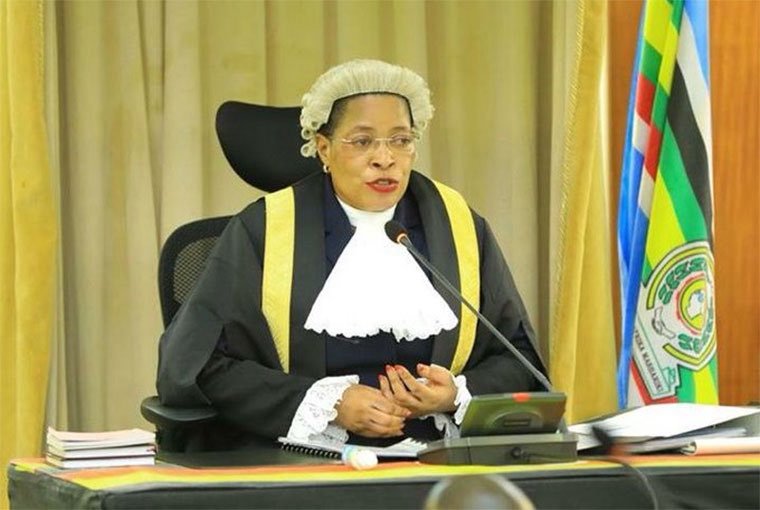
The Fall of Anita Among: Why Kyankwanzi Destroyed Her Speakership Bid and Why Oboth-Oboth Is the NRM’s Man
For months, Anita Annet Among appeared untouchable. With President Yoweri Museveni and the NRM’s Central Executive Committee (CEC) having repeatedly endorsed her for Speaker of the 12th Parliament, her re-election seemed a foregone conclusion. The deal was reaffirmed on 20th February, forwarded to the NRM Parliamentary Caucus, and formally blessed by Museveni on 4 March.
So how did she lose it all in a matter of weeks?
The answer, according to authoritative political sources, is Kyankwanzi.
The Turning Point
The NRM’s retreat-cum-induction for newly elected MPs, held from 7–14 April at the Kyankwanzi political school, proved catastrophic for Among. Two seismic shifts occurred: the surprise entry of Norbert Mao into the Speakership race, and a fundamental change in President Museveni’s perception of threat.
Mao’s sudden candidacy, backed by intense lobbying of power brokers including Salim Saleh and outreach linked to Gen. Muhoozi Kainerugaba, rattled Among’s camp. Feeling cornered, Among reportedly reverted to the raw, patronage-driven politics that had made her unopposed in Bukedea—mobilisation, intimidation, and money politics.
At Kyankwanzi, her strategy backfired catastrophically.
When President Museveni rose to address the retreat, pro-Among MPs allegedly disrupted him mid-speech, loudly chanting her name and signalling allegiance to her over the party chairman. In the NRM’s political culture, this was not mere indiscipline. It was a direct challenge to the fountain of power.
Museveni’s Red Line
President Museveni has long tolerated corruption and parliamentary excess—as long as they posed no threat to his authority. Kyankwanzi changed that calculus.
In a thinly veiled warning, Museveni declared that any MP bribing colleagues for Speakership votes would be “disqualified.” Corruption suddenly became central to the narrative, not because it was new, but because Among’s personal power centre had shown it could publicly disrupt the President himself.
“At that moment, Anita Among ceased to be an asset and became a potential rival power centre,” a senior NRM insider said. “Her work to have Museveni elected was forgotten. When she crossed the line and began talking strong, showing invincibility—her duck was cooked.”
Why Norbert Mao Was Never an Option
Despite emerging from Kyankwanzi with renewed political visibility, Norbert Mao was strategically doomed from the start.
The regime does not trust him. Mao is intelligent, calculating, ambitious, and openly presidential in outlook. His past manoeuvres inside the Democratic Party (DP)—particularly how he neutralised internal rivals to retain party control—are well understood at the centre.
“Museveni is many things, but naïve is not one of them,” the source added. Entrusting Mao with the third-highest office in the land would mean empowering a man capable of independently mobilising, negotiating, and pivoting against the regime if circumstances allowed. That risk is unacceptable. Mao was quietly ruled out.
Enter Jacob Oboth-Oboth
With Among disqualified politically and Mao deemed too risky, the NRM’s power brokers settled on a safer, more predictable choice: Jacob Oboth-Oboth.
Oboth-Oboth, a seasoned legislator and lawyer, emerged as the main contender because he represents none of the threats that doomed the other candidates. He is viewed as loyal, institutionally-minded, and unlikely to build an independent power base capable of challenging the presidency.
Unlike Among, he carries no baggage of a personal political machine that can disrupt State House events. Unlike Mao, he harbours no overt presidential ambitions. In the NRM’s current calculus, Oboth-Oboth is the steady hand who will run Parliament without ever forgetting who holds the ultimate authority.
As the 25 May Speaker’s vote approaches, one thing is clear: Kyankwanzi didn’t just reshape the race—it ended two candidacies and anointed a third. Anita Among fell because she reached too high. Norbert Mao was locked out because he might reach even higher. And Jacob Oboth-Oboth stands ready, precisely because he will not reach at all.
About The Author