
Uganda Enacts Protection of Sovereignty Act After Parliamentary Amendments
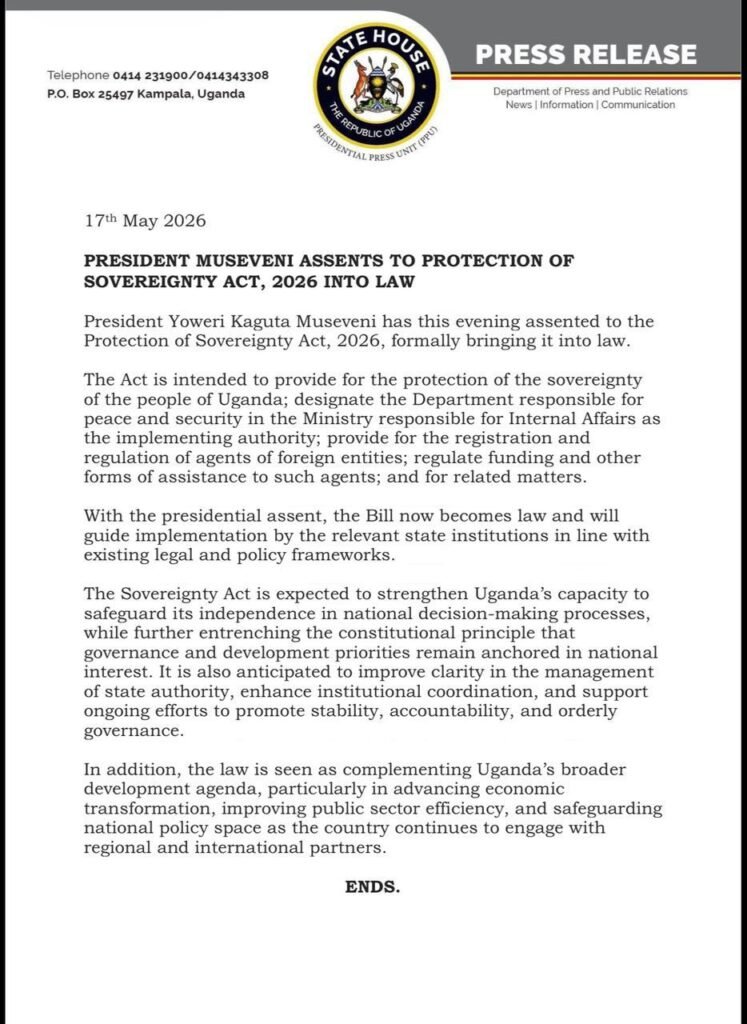
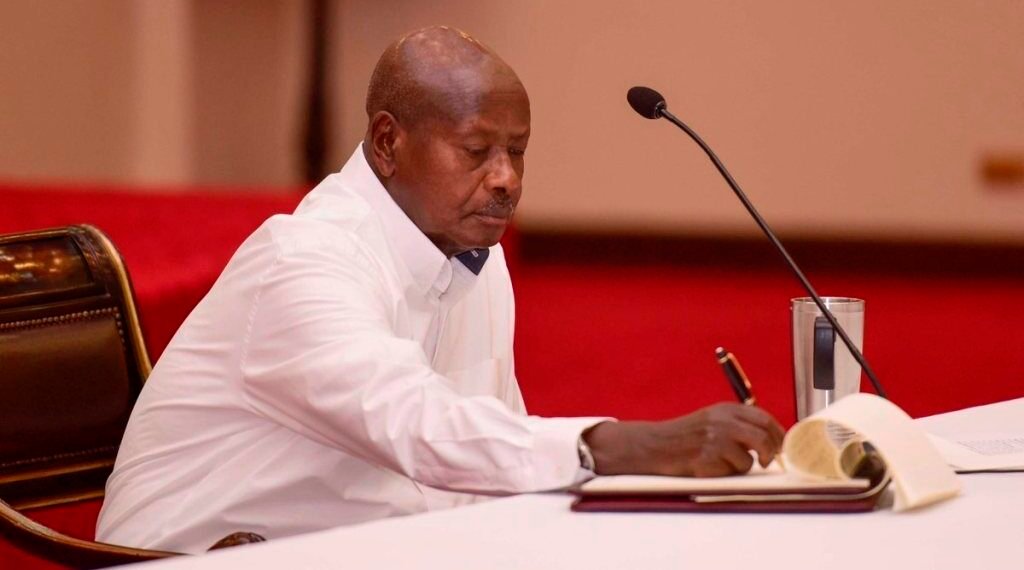
KAMPALA, Uganda — President Yoweri Kaguta Museveni assented to the Protection of Sovereignty Act, 2026, on May 17, formally bringing the legislation into law following weeks of intense parliamentary debate and significant amendments.
The Act is designed to protect Uganda’s sovereignty by regulating the activities of agents acting on behalf of foreign entities, requiring registration and disclosure of funding, and designating the department responsible for peace and security within the Ministry of Internal Affairs as the implementing authority.
Parliament Overhauls Original Bill
Prior to the president’s assent, Parliament passed the bill on May 5 after adopting substantial amendments that narrowed its scope and removed provisions critics said threatened civil liberties.
According to the majority report presented by Hon. Wilson Kajwengye, Chairperson of the Committee on Defence and Internal Affairs, consultations involved over 200 stakeholders across government institutions, civil society, the private sector, academia, and the diaspora.
Key amendments included:
· Restricting application exclusively to “agents of foreigners,” removing earlier language that applied to “any person”
· Exempting Ugandan citizens living abroad from the law’s scope
· Replacing blanket ministerial approval for foreign funding with a declaration regime
· Reducing maximum penalties from 20 years’ imprisonment to 10 years
· Removing controversial provisions mandating mental and physical health examinations and inspection powers without court orders
The amended law also explicitly protects lawful financial flows including diaspora remittances, foreign direct investment, trade, and humanitarian assistance. Financial institutions, academic and research bodies, health facilities, and individuals receiving funds for legitimate commercial or domestic purposes are exempted.
Dissenting Voices
Despite the amendments, several lawmakers opposed the bill. Hon. Jonathan Odur (UPC, Erute County South) presented a dissenting report, alleging that microphones of opposing members were switched off during proceedings.
Hon. Wilfred Niwagaba (Ndorwa County East) argued the bill criminalizes free speech and infringes on Article 1 of the Constitution. Hon. Joel Ssenyonyi, Leader of the Opposition, raised procedural concerns about a letter reportedly written by the president disowning an earlier version of the bill.
Speaker Anita Among ruled that the amendments had not altered the object of the bill, allowing the legislative process to proceed.
Government Justification
Minister of State for Internal Affairs, Gen. David Muhoozi, who moved the motion, said Uganda faces challenges that threaten its ability to self-govern. The government expects the Act to strengthen Uganda’s capacity to safeguard independence in national decision-making while complementing the country’s broader development agenda, including economic transformation and public sector efficiency.
The law took effect upon the president’s assent on May 17, 2026.
About The Author