
Uganda’s Oil Revenue ‘Not Enough’ to Offset Economic Impact of Sovereignty Bill, Central Bank Warns
KAMPALA — The Bank of Uganda has issued a stark warning that anticipated revenue from the country’s first oil production will be insufficient to shield the economy from potential fallout if the controversial Protection of Sovereignty Bill, 2026, becomes law.
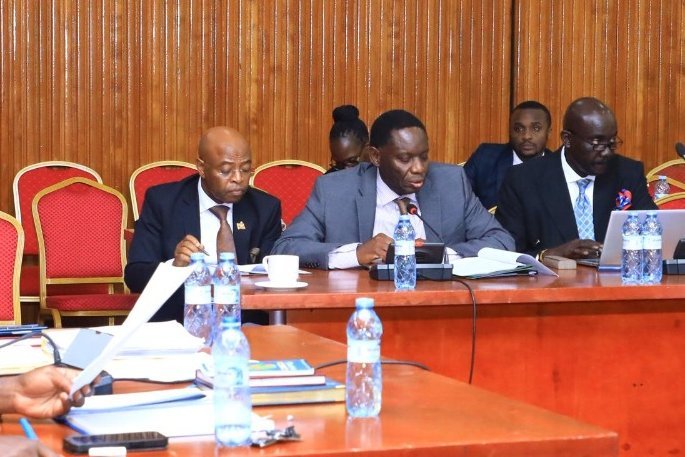
Testifying before Parliament’s Joint Committee of Defence and Internal Affairs and the Legal and Parliamentary Affairs Committee, Governor Michael Atingi-Ego revealed that most oil revenues will instead be channeled toward repaying existing debts — both for government and private sector players like CNOOC and Total, which financed their oil exploration and production through loans and equity that must be repaid.
“Most of that money is going to be paid out for debt and not coming back,” Atingi-Ego said. “So, that first oil is not sufficient to handle problems the way it is.”
$2 Billion Annual Debt Repayment
The Governor explained that Uganda’s debt growth has been driven partly by infrastructure development necessary for oil production, including roads built with borrowed funds.
“Currently, we are having huge amounts of debt repayment, partly made possible by the loans,” Atingi-Ego stated. “We are currently paying about US$2 billion per annum, and we are going to continue for the next four or five years, paying that US$2 billion per annum.”
He further cautioned that oil revenue would not provide a significant bailout, noting that both upstream and downstream development have been largely undertaken through loans.
Response to MP’s Questions
The Governor’s remarks came in response to Fox Odoi (West Budama North East), who sought clarification on arguments from bill supporters that Uganda’s economy has reached an “adolescent” stage of growth and should reduce dependence on foreign funding.
Odoi noted that government has indicated financial inflows from first oil beginning July 2027, asking whether the Central Bank had seen projections on oil and gas earnings that could address balance of payment concerns.
Atingi-Ego confirmed that while oil revenue will arrive, the associated outflows — primarily debt repayment — will significantly limit its impact on stabilising the economy. “This oil will not bail us out significantly, given the outflows that are associated with it,” he said.
The Protection of Sovereignty Bill, 2026, remains under consideration by Parliament.
About The Author