
BBC Investigation: How Ugandan Scammers Use Injured Dogs to Defraud Animal Lovers Online
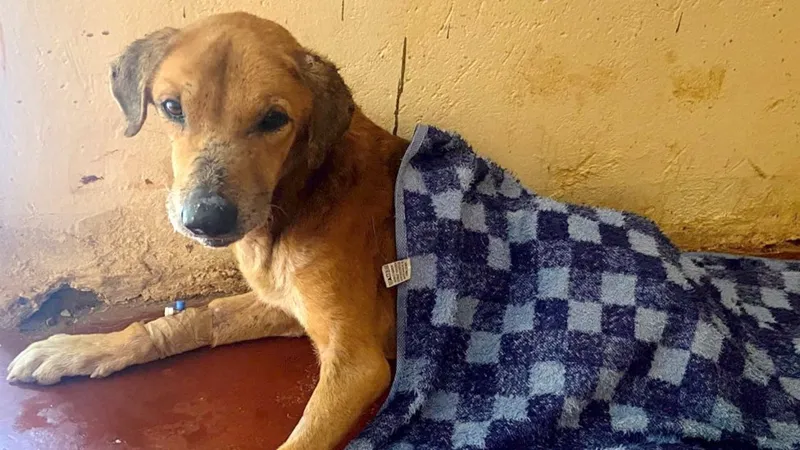
MITYANA, Uganda — A dog with rust-colored fur lies at the side of a road, severe injuries to his hind legs visible as he pants in apparent pain. The TikTok video asks viewers to “save his life” through an online donation link.
That dog, later named Russet by a concerned social media user in the UK, became the centerpiece of hundreds of fundraising campaigns posted by at least a dozen different accounts over three weeks. Thousands of dollars were raised for his treatment. But Russet never got better.
A BBC Africa Eye investigation has uncovered a hidden industry in the Ugandan town of Mityana, where scammers exploit injured and abused dogs to solicit donations from compassionate animal lovers thousands of miles away.
The Business of Fake Shelters
In Mityana, a trading center about 70 kilometers (43 miles) from Kampala, sham dog rescue shelters have become an open secret. Local residents told the BBC the con artists are easily identifiable — often young men driving status-symbol cars like Subarus.
“The scammers are the most respected here in Mityana,” one resident said, speaking on condition of anonymity due to fear of retaliation.
Data analysis by BBC Africa Eye found that over the past five years, more than $730,000 (£540,000) has been raised for animal shelters in Uganda through GoFundMe. Nearly 40% of all fundraisers analyzed were connected to Mityana.
Send undercover journalists posing as newcomers to the business discovered that some local establishments rent out dogs and shelter space to multiple content creators, who pay an entrance fee to film videos that are then posted across various social media accounts with affiliated fundraising links — meaning the same injured dogs are used repeatedly by different scammers.
‘Drain Them’: Inside the Operation
At one shelter run by a young man named Charles Lubajja, undercover journalists found approximately 15 dogs kept in a single cage, lying in their own waste. Many appeared severely underweight and lethargic.
Lubajja openly explained that the shelter exists to generate money from overseas viewers under false pretenses. His advice to the undercover team included:
· Pretending landowners have threatened eviction to solicit relocation funds
· Faking veterinary treatments by placing syringes in fur without injecting
· Inflating dog food costs by more than 11 times
“Once you receive the GoFundMe money, you use it to buy a car or build a house,” Lubajja said during secret filming. “Once you get a white donor, don’t treat them as a brother. You have to squeeze them. Drain them.”
Deliberate Harm
Lubajja confirmed to undercover journalists that some scammers have deliberately injured dogs to create content. “When they ran out of content, some people started cutting the dogs and asked for money,” he said.
He claimed this backfired when donors recognized the abuse, adding: “[Scammers] no longer cut the dogs because they lost money when the white people realized.”
However, online activist groups monitoring Mityana-linked accounts believe animals are still being deliberately harmed. Nicola Baird, a 49-year-old from Yorkshire, England, runs the Instagram account “We Won’t Be Scammed” — which Lubajja described as the scammers’ “biggest problem.”
Baird became an activist after sending money to a Mityana man claiming his dog needed surgery following an accident. When she received photos of the alleged surgery, veterinarians confirmed the images looked more like abuse than medical care.
“That’s when I thought: ‘Oh my goodness, I’ve enabled this abuse,'” she told the BBC. “The scammers, I just have hatred for them. They are the epitome of evil.”
The Case of Russet
After Russet appeared in countless fundraising videos over three weeks, a British donor negotiated his release to a veterinary clinic in Kampala. Dr. Isa Lutebemberwa picked up the dog and performed surgery to repair his broken legs.
But Lutebemberwa believes the injuries were no accident. Describing Russet’s X-ray, he said: “If you look at these bones, all of them were broken almost in the same position. If you are interested in breaking a bone, it’s the position you would go for, because it is the weakest.”
Russet survived surgery but died days later. “If you looked in his face, you would see that he had endured a lot of suffering,” Lutebemberwa said. “Given everything he had gone through, he did not deserve to die.”
Who Bears Responsibility?
Bart Kakooza, chairman of the Uganda Society for the Protection and Care of Animals, partially blames international donors for fueling the problem.
“People who are donating money are causing the problem of animal cruelty here, because they keep on fueling it, they are fanning the fire,” Kakooza said.
Baird agreed: “The message that we have to take from Russet’s abuse is the donations prolonged his agony. Had people not donated, Russet would not have suffered as long as he did.”
Legal Action
Mityana police conducted an operation in 2023, rescuing 24 severely injured dogs from a sham shelter. Three suspects were arrested and charged with animal cruelty before being released; their case was closed with only a warning.
Now, an international coalition of activists, including Kakooza, is pursuing private prosecutions. “We hope this case will be a deterrent for many other people who wish to continue operating in this illegal trade,” he said.
When contacted by the BBC, Lubajja denied injuring animals and said he did not recognize Russet, though he acknowledged that content creators pay to film at his shelter.
For the dogs still trapped in Mityana’s shelters, activists struggle to offer concrete solutions — but they hope increased awareness among donors will reduce the flow of money and, ultimately, the suffering.
The BBC contacted Charles Lubajja for comment on the investigation’s findings. He denied injuring animals and said he did not recognize Russet.
About The Author