
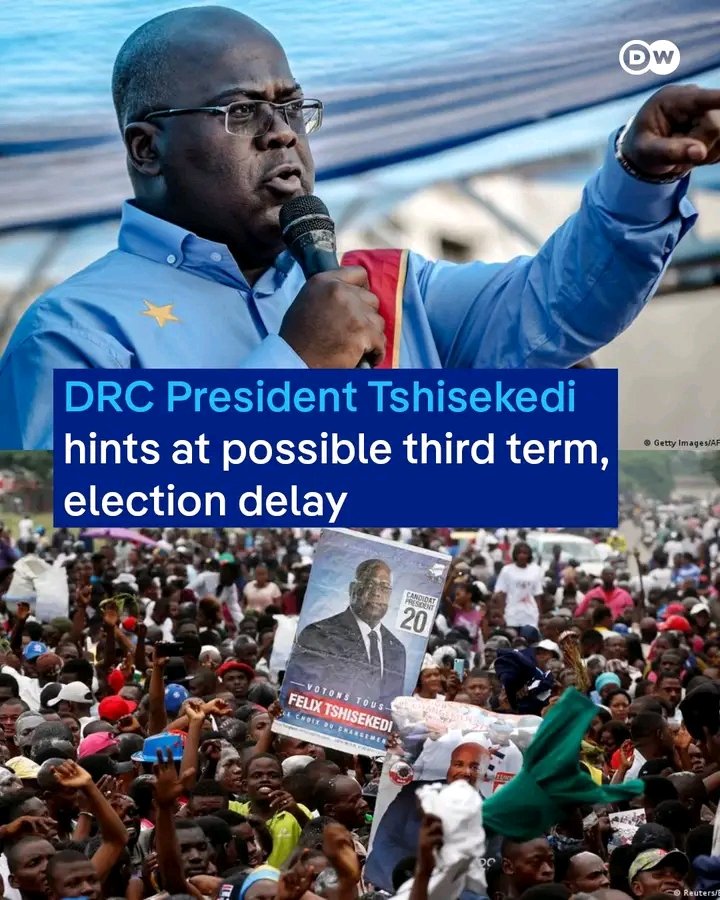
Tshisekedi Opens Door to Constitutional Revision, Citing Conflict That Could Delay 2028 Vote
KINSHASA — Democratic Republic of Congo President Félix Tshisekedi has sparked a fresh political debate after suggesting that constitutional changes could allow him to remain in power beyond 2028 — though he insisted any such move would require public approval and that he has not personally sought an extension.
Speaking at a news conference on Wednesday, the 62-year-old leader reiterated that the current constitution limits presidents to two terms, a cap that would see him step down in 2028. However, he added that a revision of the charter could be considered, provided it is backed by the Congolese people.
“I have not personally sought to extend my stay in power beyond the constitutional limit,” Tshisekedi said. “Any revision of the constitution would only happen with public approval.”
The remarks immediately reignited concerns among opposition figures and civil society groups, who have previously warned that tampering with term limits could reverse democratic gains in the vast, mineral-rich nation.
Conflict as a potential catalyst
Tshisekedi also warned that the ongoing fighting in eastern DRC might force a delay to the 2028 presidential election. Intense clashes have continued between Congolese forces and the Rwanda-backed M23 rebels in North and South Kivu provinces, displacing hundreds of thousands and destabilizing the region.
While the president did not explicitly tie his own political future to the security crisis, his suggestion that the vote could be postponed — coupled with openness to constitutional reform — has fueled speculation about his long-term intentions.
Opposition pushes back
Opposition leaders and democracy advocates have previously rejected any attempt to amend presidential term limits, arguing that such a move would amount to a constitutional coup. Under the current law, Tshisekedi, first elected in 2018 and reelected in 2023, is barred from seeking a third term.
Civil society groups have called on the president to clarify his position, warning that even floating the possibility of revision risks eroding public trust in the electoral process.
As fighting intensifies in the east, observers say the government faces twin challenges: containing a growing rebel insurgency while maintaining a credible electoral timeline. Whether security concerns become a legitimate reason for delaying the vote — or a pretext for extending the president’s rule — remains an open and increasingly contentious question.
About The Author