
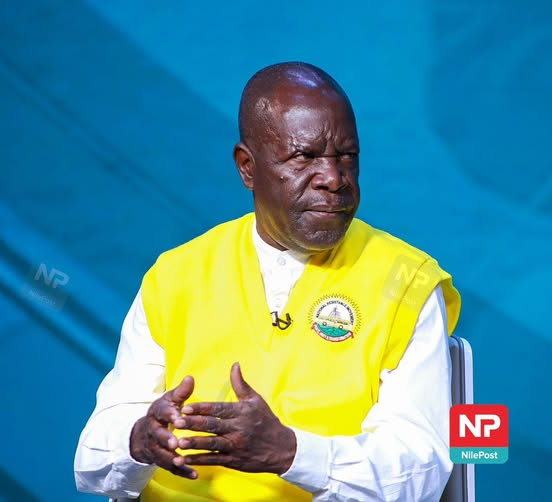
“I Followed CEC’s Directive”: Former Spokesperson Ofwono Opondo Defends Support for Among, Tayebwa
KAMPALA – Former Government Spokesperson Ofwono Opondo has broken his silence on his past support for Speaker Anita Among and Deputy Speaker Thomas Tayebwa, insisting that he was simply adhering to the directive of the NRM Central Executive Committee (CEC).
Speaking out against claims that he ignored corruption concerns in Parliament, Opondo argued that his endorsement was part of a unified party position. He pointed out that President Museveni himself was among those who backed the leadership duo.
“First of all, who was not? President Museveni was. Aren’t they the ones that endorsed AAA and TT?” Opondo asked. “I was defending and promoting the unanimous position of CEC. You remember in February 2026, CEC endorsed Anita Among. Not only that, they released a public statement to the media.”
Having served as a spokesperson for both the NRM and the government for 26 years, Opondo questioned whether anyone expected him to publicly disagree with the party’s highest decision-making body. However, he noted that circumstances have since evolved.
“If CEC or internal dynamics have changed, you don’t expect a former spokesperson to remain obstinate,” he said. “I have just told you earlier on that the investigation surrounding Anita Among makes her eligibility or even the candidature unattainable.”
‘They Changed Their Ways’
Rejecting accusations that he stayed silent when corruption concerns first emerged, Opondo revealed that he had previously spoken out—so much so that he was once reported to President Museveni over his criticism. He also held internal talks with both Among and Tayebwa.
His primary concern, he said, was how Parliament’s leadership handled public accountability.
“Indeed, both of them came and I said: how can you be asked to account and you say you can’t account to the media?” Opondo recounted.
According to the former spokesperson, those conversations yielded promises of reform. He said Among and Tayebwa pledged to accept public criticism over how Parliament was being run.
“They changed their ways and we have been having serious internal discourse with both Tayebwa and Anita,” Opondo said. “If somebody promises you that they have left their wayward ways—in Buganda we say bwomega toluma.”
While acknowledging that the change may not have been dramatic, Opondo maintains that improvement did occur.
“I think the last two, three years indeed they have changed in my view. It may not be a very big change but they changed,” he concluded.
The remarks have revived debate over accountability in Uganda’s Parliament, with observers questioning whether the promised reforms have satisfied public expectations—or whether they came too little, too late.
About The Author