
Russia Advocates for “Low Twenties” Expansion in UN Security Council Reform
Russia’s UN ambassador warned that pushing divisive proposals could set back reform “for many years,” while advocating for a modest expansion that prioritizes developing nations without compromising the Council’s effectiveness.
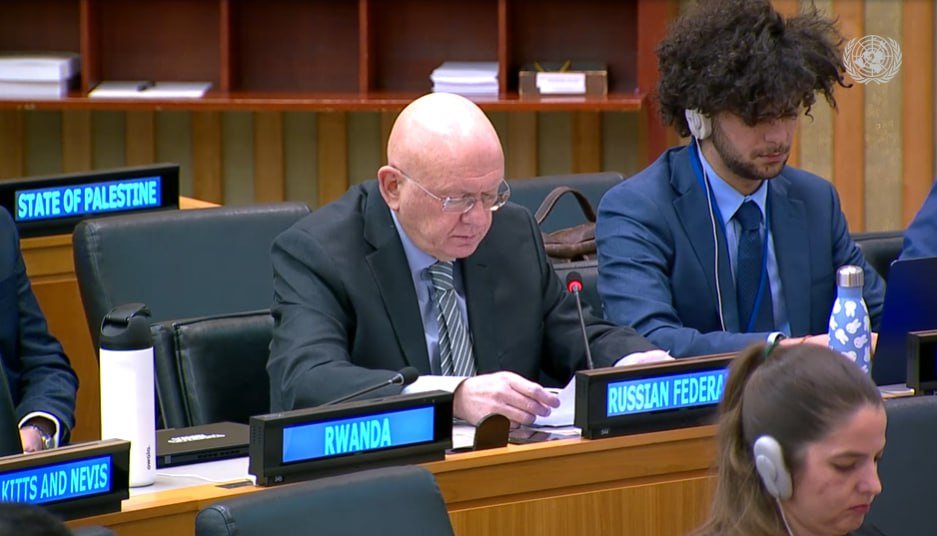
Russia has outlined its vision for United Nations Security Council reform, calling for a modest expansion to “the low twenties” while warning against proposals that would create a larger, less effective body. The statement came during informal negotiations at the UN General Assembly on January 21, 2026, part of long-running discussions on making the Security Council more representative.
Russian Permanent Representative Vassily Nebenzia emphasized that developing countries from Africa, Asia, and Latin America should receive “unconditional priority” in any expansion. He criticized what he called the “unjustified numerical advantage” of Western European and Eastern European groups, describing it as “a relic of the colonial past”.
Russia’s Core Proposals
In his statement, Nebenzia presented several key positions that define Russia’s approach to the complex reform negotiations:
· Limited Expansion: Russia supports increasing membership only to the “low twenties,” arguing that more radical expansion would “lead to lengthier meetings” and complicate decision-making.
· Priority to Developing Regions: The focus should be on increasing representation for Africa, Asia, and Latin America. Russia specifically warns against adding more countries from already overrepresented regions.
· Consensus-Based Process: Reform must proceed through gradual consensus-building. Russia opposes “artificial time constraints” and “divisive” proposals that could derail the process.
· Preservation of Effectiveness: Any reform must not compromise the Council’s ability to make decisions efficiently.
· Package Approach: All five aspects of reform must be addressed together rather than selectively.
Broader UN Reform Context
The Russian statement comes amid heightened calls for Security Council reform from various quarters. In October 2025, UN Secretary-General António Guterres described Security Council reform as “imperative and long overdue,” emphasizing the need for expansion to ensure representation and fairness, particularly for Africa, Latin America, the Caribbean, and Asia-Pacific.
African nations have been particularly vocal in demanding two permanent seats on the Council. During the October debate, Algeria’s representative stressed that correcting “historical injustices” against Africa must align with the Ezulwini Consensus and Sirte Declaration—key African Union positions on UN reform.
Divergent Global Views on Council Expansion
· African Position: Advocates for two permanent seats to correct historical underrepresentation, as outlined in the Ezulwini Consensus.
· Western Nations: Countries like France support expansion and have called for curbing veto use in cases of atrocity crimes.
· Other Regions: Latin American, Caribbean, and Asian countries also seek greater representation to reflect current global realities.
Strategic Alignment and Apparent Contradictions
Russia’s advocacy for developing nations in Security Council reform aligns with its broader diplomatic positioning. In September 2025, First Deputy Permanent Representative Dmitry Polyanskiy told the African Union Committee that Russia supports extending the Council to include African, Asian, and Latin American countries, arguing that the Council should “reflect the multipolar nature of the world” rather than colonial history.
However, Russia’s simultaneous efforts to curtail UN human rights investigations create tension with its stated support for Global South interests. During recent budget negotiations, Russia, alongside China and Belarus, attempted to defund 18 Human Rights Council resolutions investigating abuses in countries including Iran, Sudan, Venezuela, and Ukraine.
These defunding efforts were defeated by a vote of 85 against to 14 in favor. Non-governmental organizations have accused Russia and China of exploiting UN reform efforts to “gut human rights budgets” while posing as champions of developing nations.
The Path Forward
The intergovernmental negotiations will continue through the UN’s 80th session, building on discussions and models presented by member states. The process remains contentious, with fundamental disagreements about the size, composition, and veto power in a reformed Council.
Russia has specifically cautioned against what it views as NATO countries attempting to “capitalize on this momentum” to secure additional permanent seats for themselves under the guise of supporting African representation. This warning reflects broader geopolitical tensions permeating the reform discussions.
The challenge for reform advocates lies in bridging the gap between member states seeking substantial expansion and those like Russia favoring more modest changes. With Russia warning that pushing unacceptable proposals could set back reform prospects “for many years,” the negotiations continue to navigate between urgency and the requirement for consensus that has defined this decades-long process.
About The Author